Teacher resource · paper cut · 8 pages
The Feelings Weather Report
A classroom script becomes eight clear visual cards for naming intensity without assigning a good or bad label to a feeling.

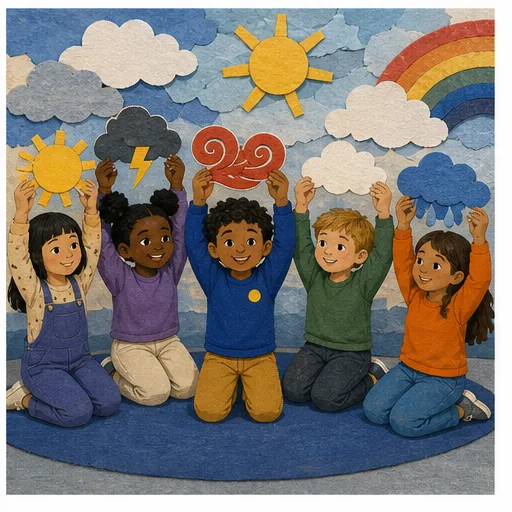
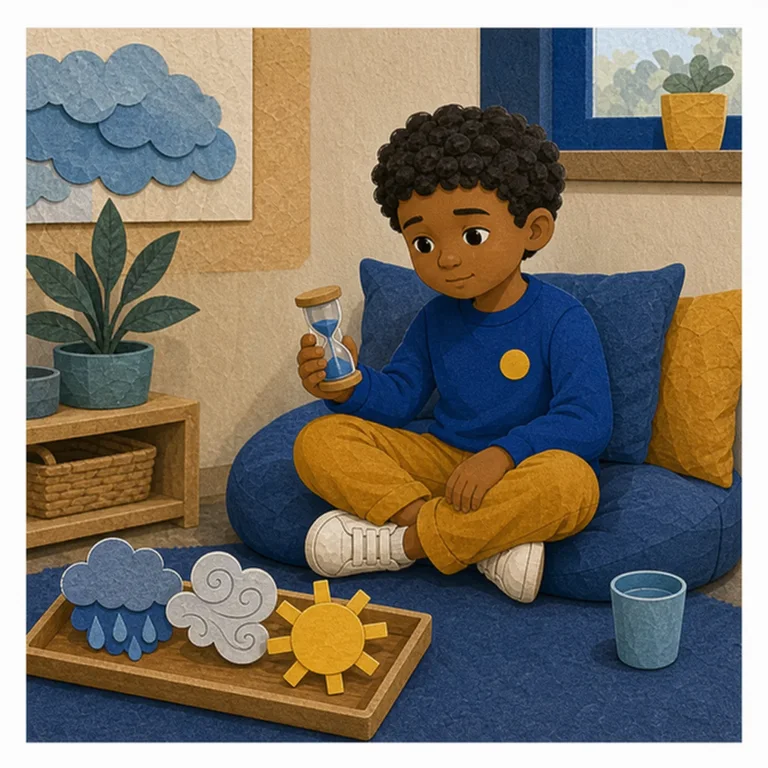
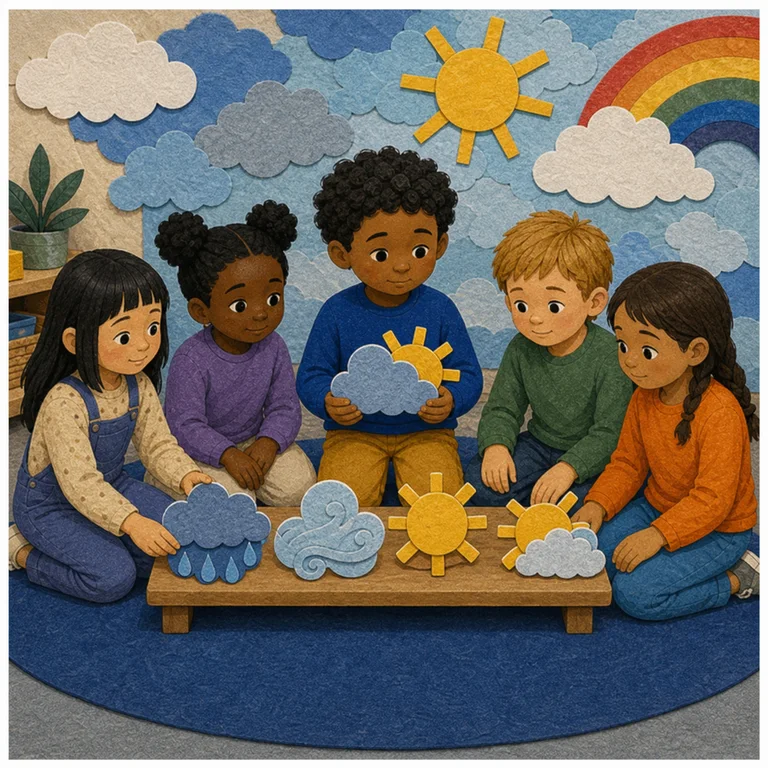
01 · Source manuscript excerpt
Today’s inside weather may be sunny, cloudy, windy, stormy, or many things at once.
We can notice the weather without becoming the whole sky.
Point to the card that feels closest, then choose what your body needs.
02 · Page plan, reviewed by the creator
The words split into 8 page turns before any art was made.
- Arrive with more than one kind of inside weather
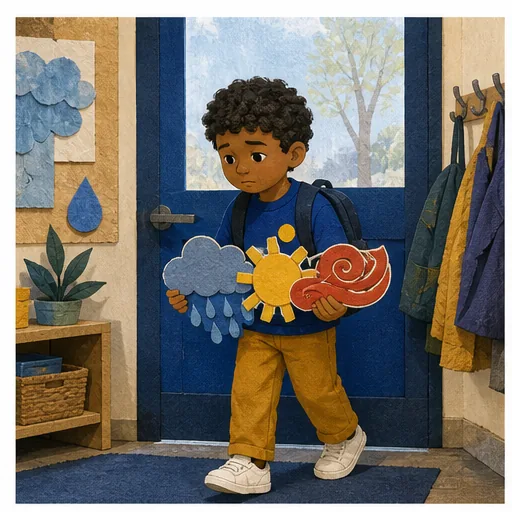
Malik arrived carrying rain, sun, and a strong red wind inside.
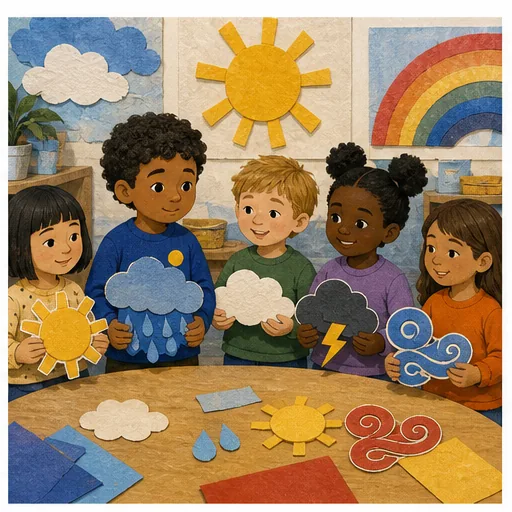
- Let five classmates choose without judgment
His classmates chose their own weather. No symbol was the right or wrong one.
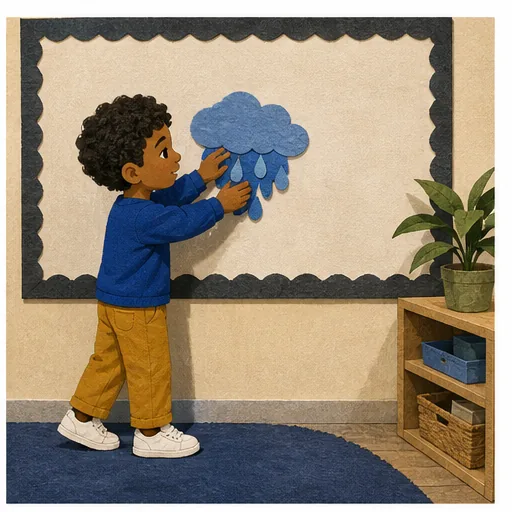
- Place the closest symbol on the shared board
Malik placed a rain cloud on the board so the room could understand without guessing.
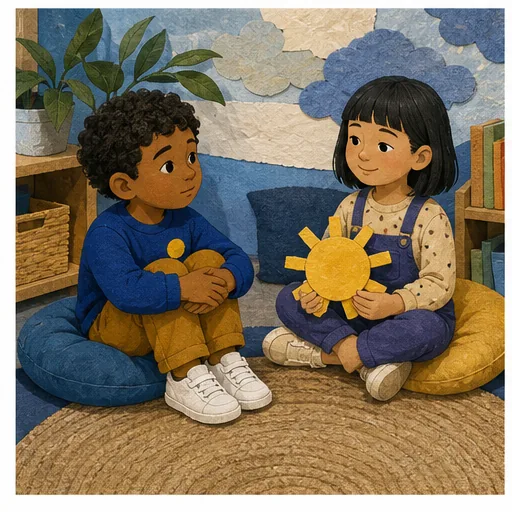
- Notice a body signal with a trusted friend
Mei sat beside him while he noticed his tight shoulders and tucked-in knees.
- Try one slow breath rather than erase the feeling
He took one slow breath and let the red wind pass through instead of pushing it away.
- See that every child’s weather can move or mix
Around the rug, every child showed how weather can change, overlap, and return.
- Choose a quiet support, timer, and water
Malik chose the quiet corner, a sand timer, and a cup of water for his body.
- Check in again with a partly sunny symbol
At the last check-in, he held up sun behind a cloud: still cloudy, with a little light.
03 · Character and style approval
The cast and visual rules are written down before the rest of the book is generated.
Malik remains the child with short tight curls, a cobalt sweater with one yellow circle, mustard trousers, and white sneakers. The classroom cast, blue rug, paper weather symbols, fibrous edges, and restrained blue-yellow-red palette are fixed in the two approved sample pages.
04 · Initial two-page draft
Two real story pages tested the character before the remaining pages were generated.
These two pages also appear in the gallery above; they are shown here as the approval gate, not counted twice.
05 · Free crop and layout demonstration
The evidence here is deliberately narrow and literal.
The displayed comparison uses the same generated classroom page to show a free crop and text-layout decision. It is not a generative-edit claim. Editable labels can move or change without regenerating art; an actual local redraw would create a separate paid image version.
What happens when pixels really change
Repainting a detail, removing an object, changing an expression, replacing a background, or generating a full new version is small paid work — about … each — and every version stays in the page’s history, so the original remains restorable.
Delivered result
Eight printable pages and screen-ready slides that use the same palette, shapes, and child-safe visual language.
Editing words, layout, crops, page order, and restoring a past version stayed free.